Whistleblowing in Theory and Practice: Academia and Practice Meet at Istanbul University
CerebraWhistleblowing was discussed at Istanbul University from both academic and practical perspectives. Prof. Dr. Nadia Smaali and Fikret Sebilcioğlu explored the role of trust, organizational culture, and effective whistleblowing mechanisms in encouraging employees to report ethical misconduct and fraud.
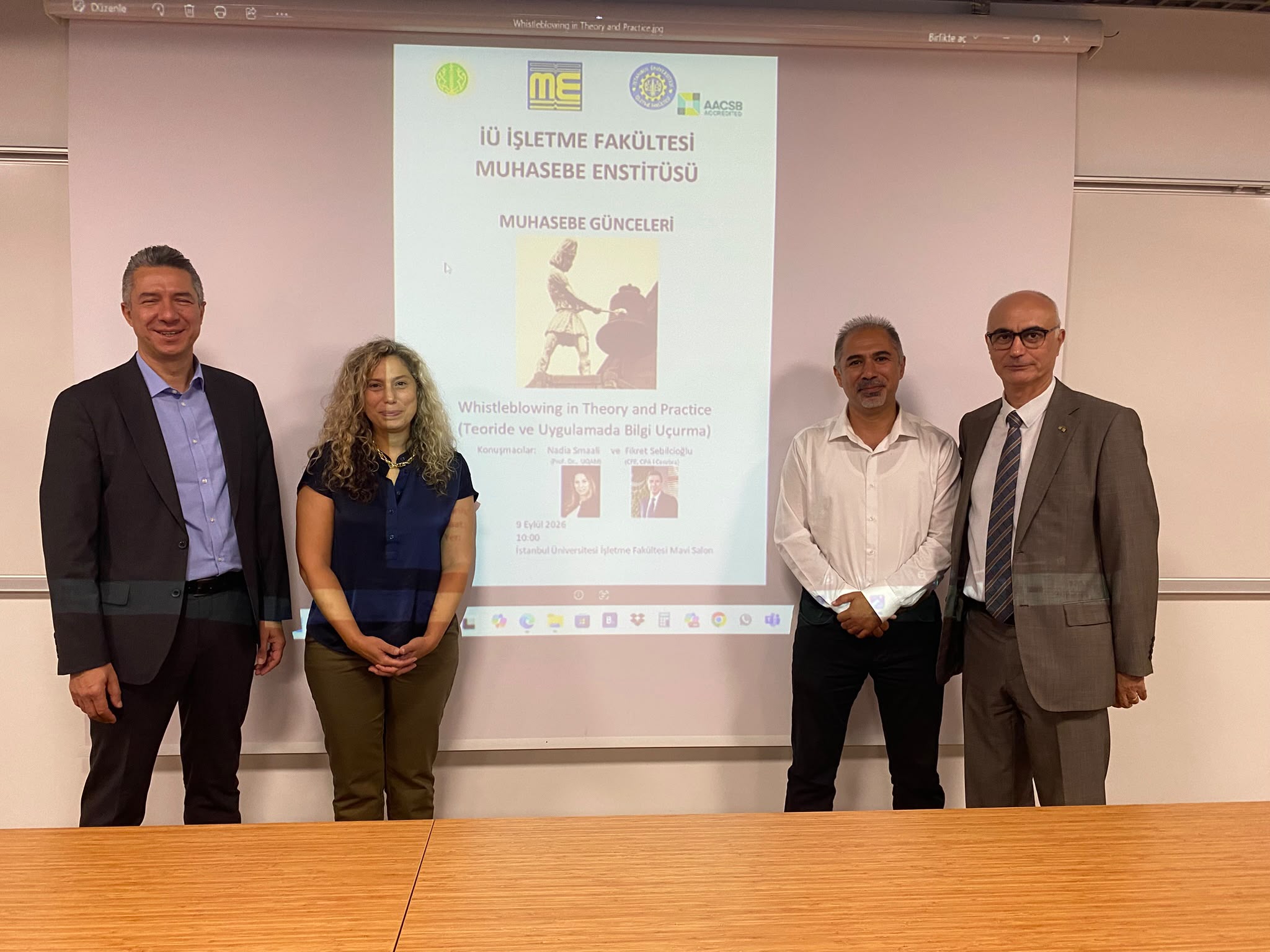
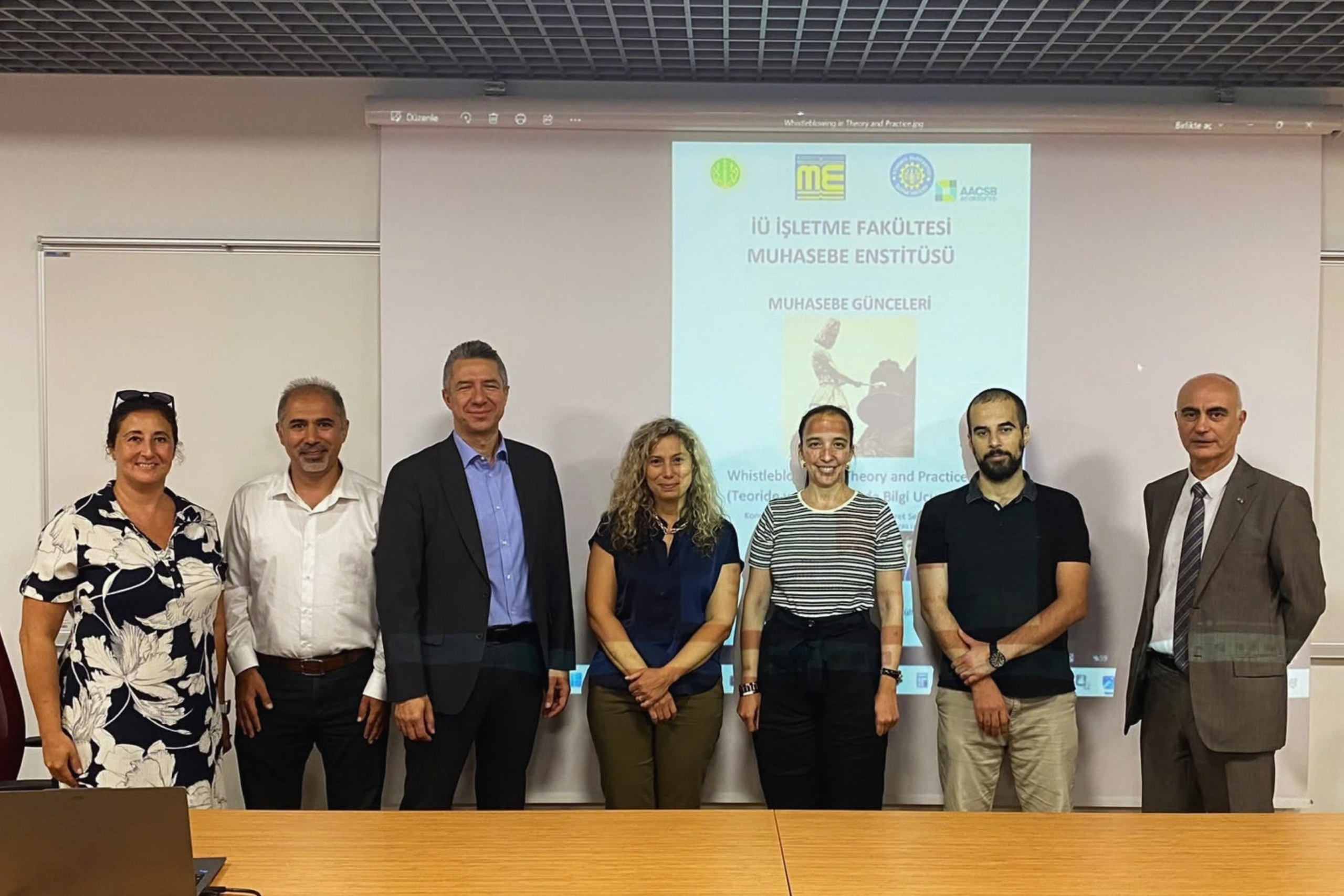
The “Whistleblowing in Theory and Practice” event, organized as part of the “Muhasebe Günceleri” series by the Accounting Institute of Istanbul University Faculty of Business Administration, was held on 9 September 2026 at the Blue Hall of Istanbul University Faculty of Business Administration. The speakers were Prof. Dr. Nadia Smaali from UQAM and Fikret Sebilcioğlu, Founder & CEO of Cerebra.
The first speaker, Prof. Dr. Nadia Smaali, explored whistleblowing through academic research and the concept of a “whistleblowing mindset.” Smaali emphasized that employees’ decisions to report fraud or unethical conduct cannot be explained solely by the existence of reporting channels and control mechanisms. She highlighted the central role of shared organizational values and, particularly, trust in shaping employees’ attitudes toward whistleblowing. The research findings underscored that an effective whistleblowing environment requires not only appropriate controls but also an organizational culture built on trust.
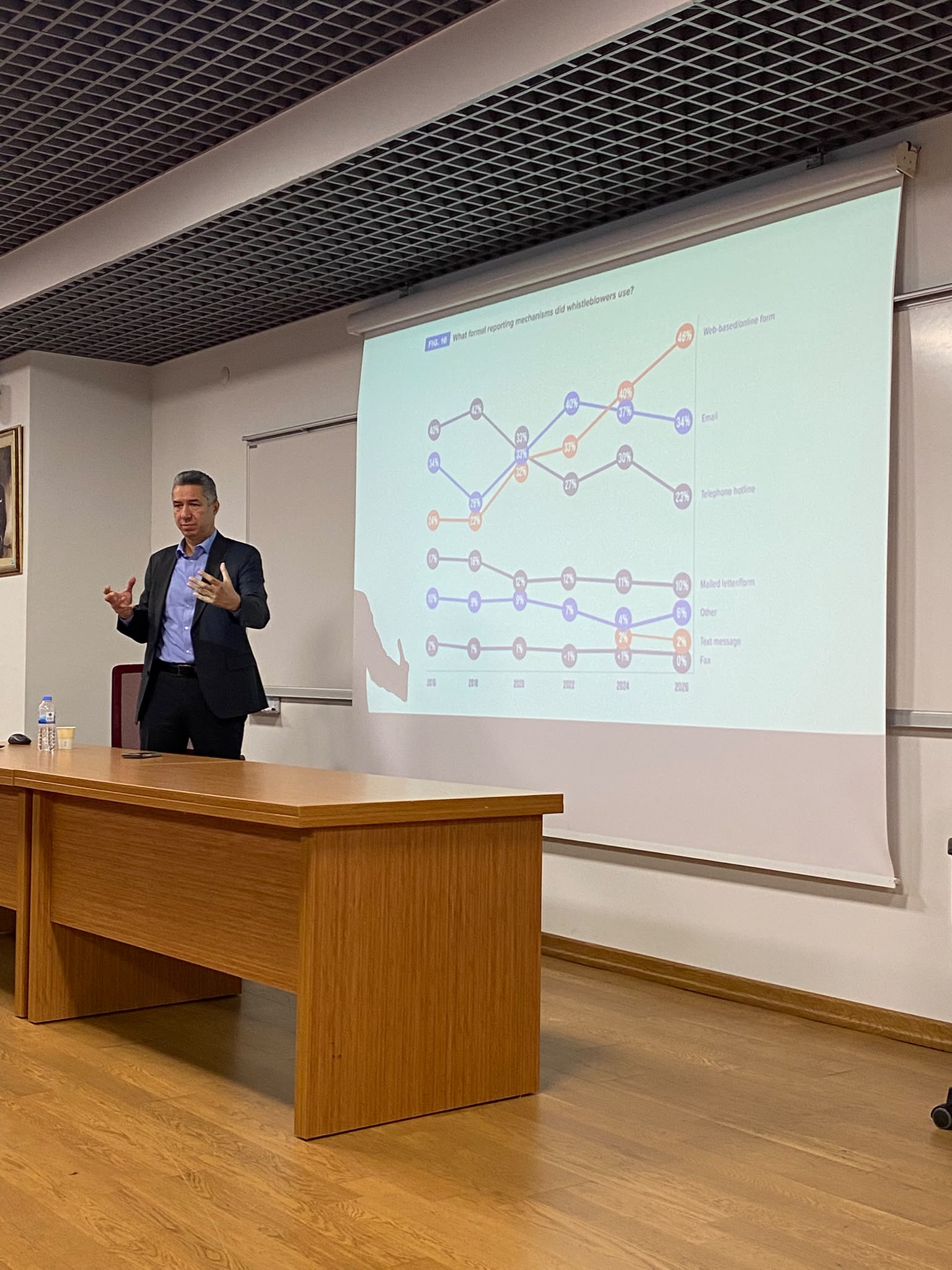
Fikret Sebilcioğlu then addressed the topic from the perspective of fraud investigations and practices in Türkiye. Drawing on global data from the ACFE as well as findings from the Fraud Perceptions Survey in Business 2026 Türkiye, conducted by Cerebra in collaboration with TEİD, Sebilcioğlu highlighted the gap between employees’ stated willingness to report misconduct and their actual use of formal reporting channels. He emphasized that the effectiveness of a whistleblowing system should not be measured merely by the existence of a hotline, but by the trust employees place in the system, confidentiality, protection from retaliation, and confidence that their reports will lead to meaningful action.
The event concluded with a shared message: at the intersection of theory and practice, effective whistleblowing is fundamentally a matter of trust.