International Fraud Awareness Week: From Awareness to Action
CerebraMarking International Fraud Awareness Week, Fikret Sebilcioğlu explores fraud risks through the findings of the 2026 Fraud Perception Survey in Türkiye and presents a six-step roadmap for organisations.
When we ask a business leader, “Is your organisation exposed to fraud risk?”, the answer is often that they are aware of the risk. But the more important question is: How well do they understand it, and what are they doing to manage it?
International Fraud Awareness Week, taking place on 15–21 November, offers an important opportunity to revisit these questions. Led by the Association of Certified Fraud Examiners (ACFE), this global initiative aims to reduce the impact of fraud on organisations, raise awareness and strengthen fraud prevention through education.
For me, however, this week is about more than talking about fraud. It is also an opportunity for organisations to take an honest look at themselves.
Our “Fraud Perception in the Turkish Business Community 2026” study, initiated by Cerebra in collaboration with the Ethics and Reputation Society (TEİD) and conducted by FutureBright Group and involving 1,066 business professionals, provides valuable insights for this reflection.
Can we manage the risks we cannot see?
According to our research, 41% of respondents consider the likelihood of fraud occurring within their organisations to be high or very high. However, another finding concerns me just as much: 33% are unsure.
The fact that one in three respondents does not have a clear view of fraud risk within their own organisation deserves careful consideration.
One of the realities we have encountered throughout our years of conducting fraud investigations is that the absence of detected fraud does not necessarily mean the absence of fraud.
Fraud, by its very nature, involves concealment and deception. Organisations must therefore focus not only on the risks they know about but also on those they have yet to recognise.
As economic pressure increases, so does fraud risk
Some 63% of respondents believe that current economic conditions are increasing fraud risk within their organisations, while 69% expect fraud risk to increase over the next 12 months.
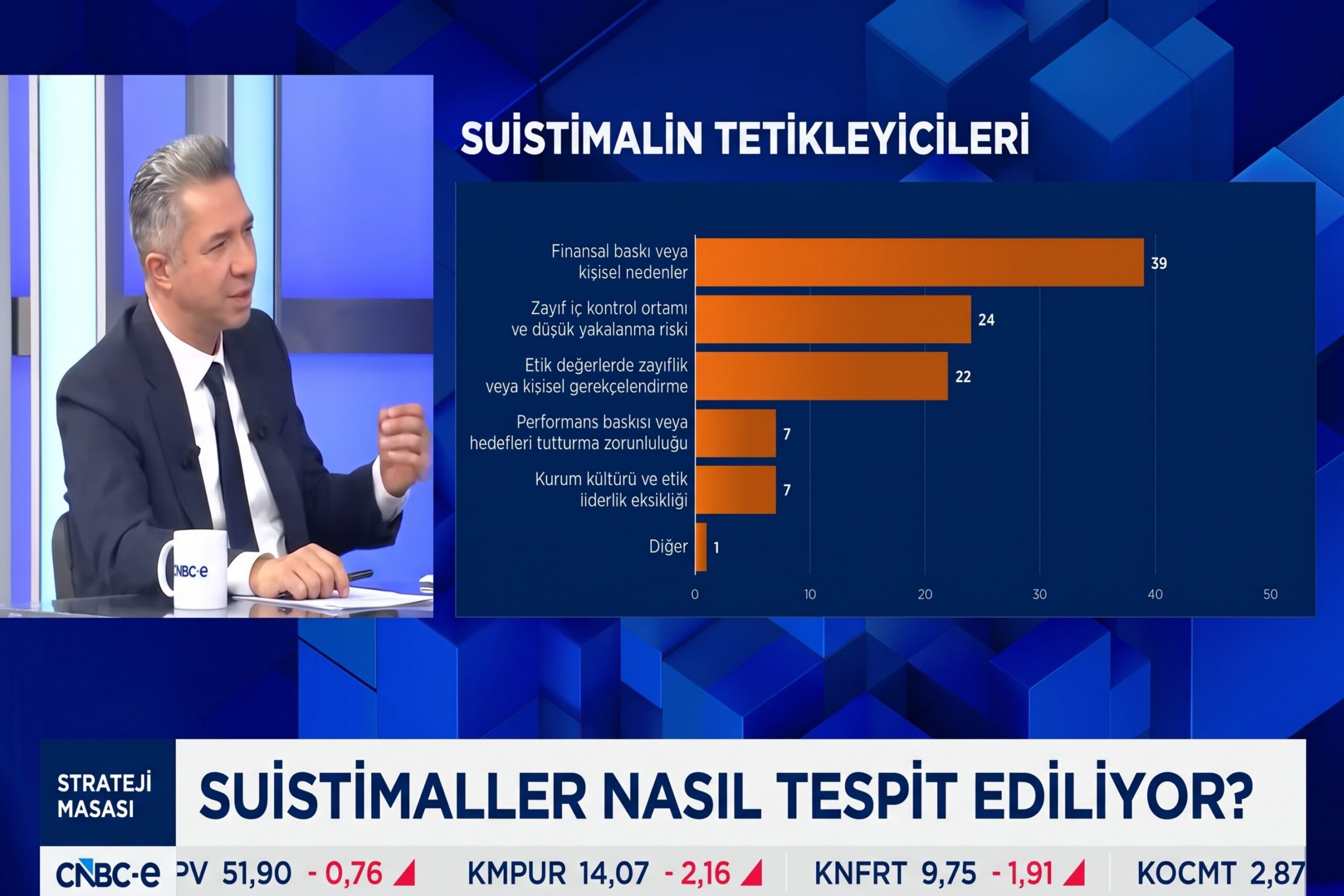
Perceived income inequality and a sense of entitlement (37%), together with high inflation and declining purchasing power (28%), stand out as the leading economic risk factors. Financial pressure and personal factors (39%) are also perceived as the most significant factors driving employees towards fraud.
The issue is not simply how much people earn, but how fairly they believe they are being treated.
Thoughts such as “I deserve this”, “The company does not pay me what I deserve” or “Everyone else is doing it” can create the conditions in which individuals rationalise unethical behaviour.
Economic hardship is, of course, no justification for fraud. However, ignoring its impact on employee behaviour is not an effective approach to managing fraud risk.
The same organisation, different perceptions of ethical culture
One of the most striking findings of our research is the gap between senior and middle management in their perceptions of ethical culture.
While 82% of senior management respondents believe that senior leaders set an example through their ethical behaviour, this figure drops to 63% among middle management. Similarly, the proportion of those who believe that ethical rules are applied equally to everyone falls from 74% to 56%.
This gap raises an important question: Is the ethical culture that senior management believes exists the same as the culture employees experience in their daily working lives?
Ethical culture is not simply about the values published on a company’s website or the principles displayed on its walls. It is defined by how leaders behave when faced with difficult decisions, how ethical violations by high-performing employees are addressed and how freely people can voice their concerns.
The greatest cost of fraud does not appear on the balance sheet
Our research identifies damage to corporate reputation and trust (27%), financial losses (25%), and declining employee morale and internal trust (22%) as the most significant consequences of fraud.
When we consider the erosion of trust both inside and outside the organisation together, the combined figure reaches 49%.
As a fraud investigation professional, quantifying financial losses is an important part of my work. Over the years, however, I have learned that measuring the amount of money lost is far easier than measuring the extent of trust lost.
A company may recover the money it has lost. But how long will it take to regain the trust of its employees in management, its customers in the company, and its business partners in the organisation’s integrity?
You will not find this damage as a separate item on the balance sheet. Yet its consequences can be felt for years.
Delivering training or changing behaviour?
According to our research, 33% of respondents report that ethics training is either not provided at all, delivered only during onboarding or conducted once every few years. Among those who receive training, 38% are either uncertain about or dissatisfied with its adequacy and effectiveness.
We therefore need to question not only the frequency of training but also its quality.
Effective fraud awareness training does more than explain the rules. It helps employees understand how fraud can occur, recognise warning signs and know what to do when they encounter a suspicious situation.
Success should be measured not by the number of training sessions completed, but by the changes they bring about in people’s behaviour.
Conflicts of interest: Awareness without action
Conflicts of interest are among the most critical risk areas we frequently encounter in fraud investigations.
In our research, corruption, bribery and improper commissions rank first at 29%, followed by conflicts of interest at 20%.
While 88% of respondents consider the disclosure of conflicts of interest an effective preventive measure, only 29% report that their organisations require regular conflict-of-interest declarations.
A procurement manager holding an undisclosed ownership interest in a supplier, or an executive prioritising the interests of family members or close associates over those of the company, can expose an organisation to serious consequences.
Recent developments at Nvidia, one of the world’s most valuable companies, have once again highlighted the significance of this risk. The resignation of its co-founder and CEO, Jensen Huang, following reports of personal relationships that raised concerns over potential conflicts of interest and allegations of espionage, illustrates how risks at the executive level can escalate into a broader crisis of corporate governance, reputation and trust.
The existence of a conflict of interest does not, in itself, constitute fraud. However, when left undisclosed or inadequately managed, it can create conditions that enable fraud. Conflict-of-interest management must therefore extend across the entire organisation, from entry-level employees to the board of directors.
From awareness to action: Six steps
In our research report, we propose six fundamental steps for organisations:
- Assess fraud risks regularly taking into account the specific circumstances of the organisation.
- Strengthen internal controls in response to identified fraud risks.
- Make ethical leadership visible through everyday decisions and behaviours.
- Establish trusted reporting mechanisms that enable employees to speak up with confidence.
- Manage conflicts of interest systematically.
- Use data analytics for continuous monitoring and early detection.
The success of these steps depends on the commitment and ownership of boards of directors and senior management.
On the occasion of International Fraud Awareness Week, I invite business leaders to put fraud prevention back on their agendas, listen to their employees and critically assess the systems they have in place.
Because the fight against fraud is not a responsibility that can be confined to a single week of the year.
Awareness is the starting point. The real challenge is to translate awareness into behaviour, behaviour into culture, and culture into sustainable organisational practices.